By Jose Lineros, Ph.D., CPA, CISA; Peggy Jimenez, Ph.D., CPA; and Jordan Bernot, Ph.D.
Tax firms are progressively exploring ways to leverage AI to handle complex tasks traditionally requiring significant human involvement, such as data processing, regulatory compliance and strategic tax planning. Therefore, understanding this interplay between AI, tax professionals and their clients is becoming increasingly important.
Client Attitudes Toward AI Use in Tax Services
As a client-facing business, it is important to consider client perceptions on the use of AI in tax services. To gain an understanding of these client perceptions, we conducted a comprehensive survey of 302 U.S. residents to gather insights into preferences and concerns regarding AI usage for tax preparation.
Our survey results indicated that clients generally exhibited moderate acceptance of AI in tax services, with a clear preference for internally developed AI systems over publicly available systems. This preference was primarily driven by security concerns, as proprietary AI solutions are perceived as more secure and less prone to data breaches compared to publicly accessible platforms. Notably, clients were open to exploring AI as an adjunct resource for their tax professionals rather than as a replacement for human expertise.
Influential Factors Affecting Client Acceptance
Several critical factors influence clients willingness to engage tax professionals who utilize AI. See Figure 1 below. The factors include:
- Perceived Usefulness - Clients are more inclined to hire tax professionals who use AI if they perceive tangible benefits, such as increased efficiency and improved accuracy.
- Social Influence - Recommendations and perceptions from family and peers significantly impact client decisions. Clients are more receptive to AI-enabled services if endorsed by trusted sources.
- Age Demographics - Interestingly, older clients exhibited greater willingness to embrace professionals using AI, possibly due to higher trust levels and confidence in professional oversight.
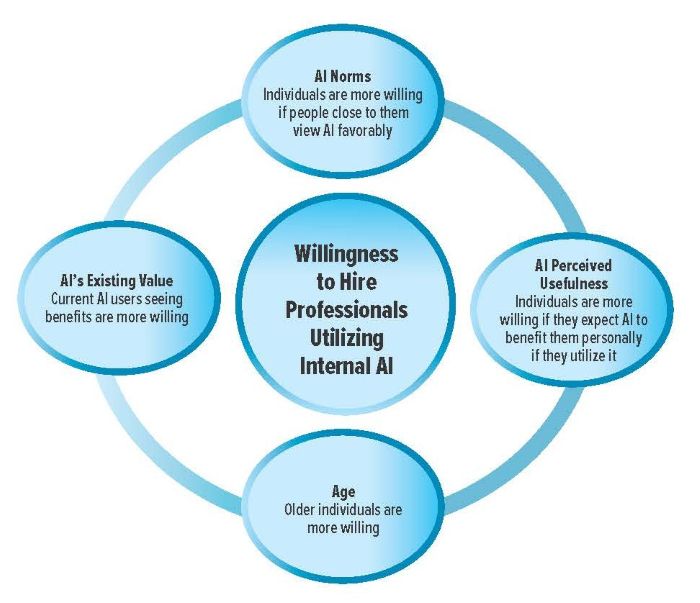
Figure 1. Factors Influencing Clients Willingness to Hire Professionals Utilizing an Internally Developed AI
The Promise and Limitations of AI in Tax Preparation
In addition to client perceptions, it is important to consider how the use of an AI system is perceived by tax professionals. AI systems promise significant efficiency improvements by automating tasks such as data entry, document analysis and basic computation. The promise of these technologies is that they will allow tax professionals to focus their efforts on more complex, strategic client engagements.
Considering these advantages and in light of client perceptions noted above, we interviewed experienced tax professionals and found some AI-related concerns. Tax professionals stressed the continuous need for human oversight, especially given the complexity of tax law and frequent regulatory changes. Currently, AI struggles notably in tasks requiring judgment, nuanced interpretation and adaptability to regulatory updates.
Challenges Highlighted by Tax Professionals
Through discussions with tax professionals, several critical challenges associated with AI implementation emerged:
Data Cleansing and Collation - Tax professionals report significant issues regarding AI s capability to effectively cleanse and manage complex client data. Currently, these tasks remain largely manual and labor-intensive.
Regulatory Compliance - AI platforms face considerable difficulty swiftly adapting to rapid regulatory changes. Delays or inaccuracies in AI system updates can lead to compliance risks and errors, potentially exposing firms and clients to liabilities.
System Integration - Tax professionals frequently encounter challenges when integrating AI with existing tax preparation software. Such integrations often lead to inefficiencies and additional operational complexities, complicating workflows instead of simplifying them.
Cybersecurity and Data Privacy - Given the sensitive nature of tax data, cybersecurity remains a paramount concern. Tax professionals strongly advocated for internally developed AI models that offer enhanced security compared to publicly available platforms.
Strategic Integration of AI in Tax Practices: The C.L.E.A.R. Framework
Effectively integrating AI into tax practices requires consideration of client and tax professional needs and a structured, strategic approach. We propose the C.L.E.A.R. framework as practical guidance for implementing AI while considering the needs of all stakeholders. See Table 1.
Communicate and Cultivate Trust. Clear and transparent communication about AI s role is crucial to maintaining client trust. Clients must clearly understand the tasks AI performs and the nature of human oversight involved. Tax professionals should clearly articulate the boundaries of AI responsibilities, emphasizing human judgment and ethical oversight.
Link AI with Client Needs. AI integration should explicitly focus on meeting specific client needs and enhancing service quality. Customized AI-enabled service models can significantly improve client satisfaction by offering tailored tax planning, optimized after-tax returns and proactive advisory services.
Educate Professionals. Professional education is essential for the successful adoption of AI. Firms must invest in ongoing training programs to ensure professionals possess the technical skills and ethical awareness required to utilize AI effectively. Training should include hands-on workshops, real-world simulations, and critical evaluation exercises to prepare professionals to identify AI limitations and biases.
Adopt Comprehensive Security Measures. Robust cybersecurity measures are critical for safeguarding sensitive client information. Firms must implement stringent security protocols, including encryption, advanced authentication methods and regular audits. Transparency about security practices further reinforces client confidence, ensuring comfort with data handling and protection.
Regularly Evaluate AI Effectiveness. Continuous evaluation and monitoring of AI effectiveness are essential. Establishing clear performance metrics, such as error rates and client satisfaction scores, provides actionable insights into AI performance. Regular feedback and adjustments ensure AI systems remain aligned with organizational goals and client expectations, maximizing long-term value. 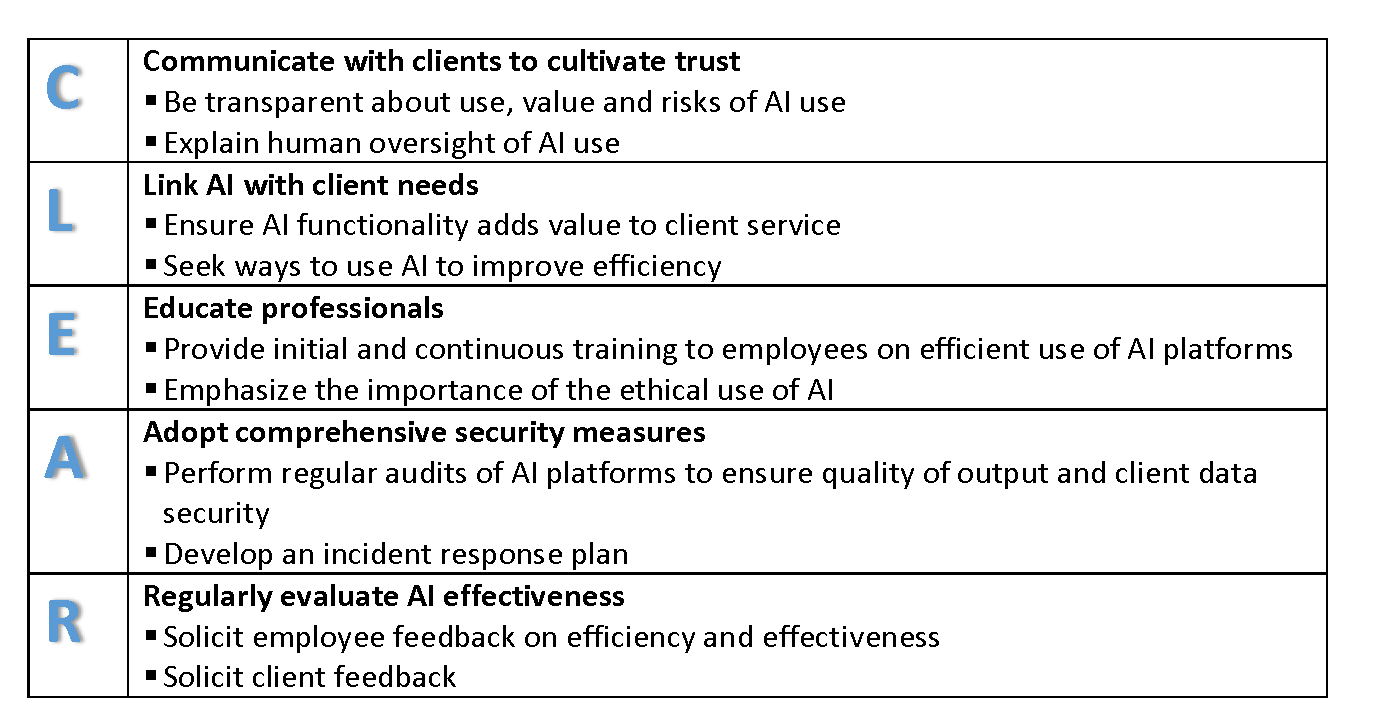 Table 1. C.L.E.A.R Framework for AI Use in Client Service
Illustrative Cases: Applying the C.L.E.A.R. Framework in Practice
To demonstrate how the C.L.E.A.R. framework translates into tangible client value, the following cases illustrate how tax firms are leveraging AI-enabled service models to enhance client satisfaction, improve after-tax outcomes and deliver proactive advisory services.
Case 1: AI-Driven Tax Planning for a High-Income Individual
A regional CPA firm implemented an internally developed AI tool to support tax planning for high-net-worth clients with complex income streams (e.g., W-2 income, pass-through entities and investment portfolios). The system integrated client financial data, historical tax returns and current tax law updates to simulate multiple tax scenarios in real time.
Using the C.L.E.A.R. framework, the firm first communicated clearly with the client about the role of AI, emphasizing that all recommendations would be reviewed by a tax professional. The AI tool was then linked to client needs by focusing on optimizing after-tax income through scenario modeling (e.g., timing of income recognition, charitable contributions and retirement plan contributions).
The AI system identified a tax-loss harvesting opportunity and recommended restructuring estimated tax payments based on projected income volatility. The tax professional reviewed these recommendations and presented them to the client with supporting explanations.
Outcome: The client achieved a measurable reduction in tax liability while expressing increased confidence in the firm s ability to provide forward-looking, data-driven advice. Client satisfaction improved due to the perceived personalization and responsiveness of the service.
Case 2: Small Business Advisory Through Predictive Cash Flow and Tax Optimization
A mid-sized firm serving small and medium-sized enterprises deployed an AI-enabled advisory platform that analyzed real-time accounting data, payroll information and prior tax filings. The system generated predictive cash flow forecasts and estimated quarterly tax obligations.
Following the C.L.E.A.R. approach, the firm educated professionals on interpreting AI outputs and identifying limitations, ensuring that recommendations were contextually appropriate. The AI system was linked to client needs by focusing on cash flow stability and minimizing tax surprises for business owners.
In one instance, the system flagged a seasonal revenue pattern that would result in a significant tax liability spike in Q4. The tax advisor proactively engaged the client to adjust estimated payments and explore accelerated expense recognition strategies.
Outcome: The client avoided a year-end cash flow shortfall and benefited from smoother tax payment planning. The proactive outreach strengthened the client relationship and positioned the firm as a strategic advisor rather than a compliance provider.
Case 3: Personalized Client Communication and Engagement
A boutique tax practice adopted AI tools to enhance client communication by generating tailored tax insights based on individual client profiles. The system analyzed prior returns, financial behavior and life events (e.g., home purchases, changes in employment) to produce customized alerts and recommendations.
Consistent with the C.L.E.A.R. framework, the firm cultivated trust by transparently explaining how client data was used and ensuring robust security measures were in place. AI-generated insights were reviewed by professionals before being shared with clients.
For example, a client who recently purchased a home received a personalized communication outlining potential deductions, property tax considerations and refinancing implications under current tax law.
Outcome: Clients reported higher engagement and perceived value due to timely, relevant communications. The firm experienced increased client retention and additional advisory opportunities as clients became more receptive to ongoing tax planning discussions.
Key Takeaways for Practitioners
These cases illustrate that the value of AI in tax practice is not derived solely from automation, but from strategic integration aligned with client needs. When implemented using a structured framework such as C.L.E.A.R., AI enables firms to:
- Deliver more personalized and proactive tax advice;
- Optimize after-tax outcomes through data-driven insights;
- Enhance client trust and engagement through transparency; and
- Improve operational efficiency without sacrificing professional judgment.
Importantly, in each case, AI serves as an augmentation tool rather than a replacement for the tax professional. The most successful implementations are those where human expertise and AI capabilities are thoughtfully integrated to create a differentiated client service model.
Navigating AI Integration Challenges
Despite AI s considerable potential, practical integration within tax practices presents significant challenges. Key barriers include:
- Technological integration;
- Regulatory adaptability; and
- Workforce training.
Embracing AI as a Strategic Partner
AI presents a transformative opportunity for tax professionals, providing powerful tools to enhance service delivery, accuracy and efficiency. Successful AI adoption relies heavily on thoughtful integration strategies, robust security practices and transparent client communication.
Rather than replacing human expertise, AI should serve as an indispensable partner, augmenting professionals' capabilities and enabling deeper, more strategic client engagements. By strategically addressing the opportunities and challenges presented by AI, tax professionals can effectively leverage technology to drive meaningful improvements in their practices and deliver superior client value.
----------------------------------------------------------------------------------------------------------------------------------------------------------------------------
Build Your AI Skills With TXCPA CPE
Artificial intelligence is rapidly changing the accounting profession and AcctoFi offers a range of CPE programs to help CPAs stay ahead. With more than 20 programs covering topics such as generative AI, Microsoft Copilot, AI-powered Excel, automation, data analysis, and practical applications for accounting and auditing, there are options for professionals at every level. Explore the full lineup on the AcctoFi website.
----------------------------------------------------------------------------------------------------------------------------------------------------------------------------
About the Authors:
Jose Lineros, Ph.D., CPA, CISA, is a Clinical Assistant Professor in the Department of Accounting at the University of North Texas where he specializes in IT Audit, Internal Audit and Advanced Data Analytics. He is past president of Information Systems and Control Association (ISACA) North Texas and remains active on their Board. His research and teaching focus on emerging risks in cybersecurity, application O/S controls, and the evolving role of AI in accounting and auditing.
Peggy Jimenez, Ph.D., CPA, is a Clinical Assistant Professor of Accounting at the University of North Texas. She is a CPA with previous public accounting experience. She has taught a variety of accounting courses, including tax and managerial accounting, at both the undergraduate and graduate levels.
Jordan Bernot, Ph.D., is an Assistant Professor at Kennesaw State University specializing in accounting information systems, FinTech and cybersecurity. His research examines how emerging technologies reshape accounting and financial processes through AI enabled decision support, automated controls, cybersecurity risk management, and data analytics, with a focus on the evolving competencies required of accounting and financial professionals.



Thanks to the Sponsors of Today's CPA Magazine
This content was made possible by the sponsors of this issue of Today's CPA Magazine: