By Dr. Ashley Bentley, Ed.D., CPA
Accounting is often regarded as a profession with a narrow set of traditional career paths. When people think of a CPA, they most likely think of tax preparation, planning or advisement. Those who are slightly more familiar with the profession may also consider audit or financial reporting roles to be common career options. Although these are certainly at the core of our profession, the reality is the career pathways are substantially broader than working in the public accounting sector or being a controller.
Due to the transferable skills gained while earning an accounting degree, such as analytical thinking, problem solving, ethical reasoning, and decision making, young professionals have the opportunity to leverage those skills and explore alternative career paths. CPAs can choose from a wide variety of jobs, including a forensic accountant, sustainability consultant or even a cybersecurity specialist. Nevertheless, most college students who enroll in an accounting program have a very limited understanding of these diverse career paths.
The Role of Accounting Education in Broadening Student Awareness
Accounting education provides the foundation needed for a successful career in the profession. However, undergraduate coursework generally focuses on basic technical content - taxation, financial reporting and auditing standards which can give students the impression that their career options are limited to those defined areas.
Although most students are drawn to accounting because of its reputation for stability and high earnings potential, young professionals today also seek work that is engaging, intellectually challenging and meaningful. A hefty paycheck and structured promotional plan may no longer be sufficient to attract the next generation of accountants.
Although traditional accounting education is necessary to develop core competencies and skills and prepare students for the workplace, educators often overlook the opportunity to expose students to a world that extends beyond tax and audit. The journey through their academic program can not only be used to teach debits and credits, but can also enrich the student’s understanding of the realities and complexities of the profession. Accounting education can prepare students for the CPA Exam, while also broadening their horizons by demonstrating how the skills they develop can open doors to career opportunities they may not have initially considered.
There are a multitude of ways accounting educators can highlight alternative pathways and help open doors to unexpected careers for students.
Start in the Classroom
The premier place to foster awareness is the accounting classroom. Educators have a captivated audience and, quite honestly, students enjoy the break from the repetition of the technical content.
Accounting is typically a part of the standard curriculum for all business programs. As such, the introductory accounting course is an ideal time to discuss the vastness of career options for accounting majors. Because students may not be aware of some of the more intriguing roles in the accounting field, such as working for Homeland Security, these conversations have the potential to “convert” majors as well.
It can also be greatly beneficial to invite guest speakers to the classroom to share their experiences. Unlike the broad overview presented by the educator in the introductory class, guest speakers can provide in-depth context of their position as it relates to a specific accounting course.
Some educators are resistant to this, as it can take up time needed for covering textbook content. However, this issue can be resolved with a simple solution. Rather than the speaker only discussing their career journey and job duties, educators can ask that they also use examples from their work to cover content of the class.
For example, I teach an undergraduate audit course. Rather than lecture on the importance of internal controls and how technology plays a role in the audit of ICFR, an internal auditor who specializes in IT audits joins us to explain the process in a real-world setting.
Additionally, I teach a graduate level forensic accounting course. When discussing how to gather and analyze evidence, I invite an investigator from either the federal or state bureau of investigation to share their process for collecting evidence and investigating financial crimes. Students are much more engaged in the learning process when they have tangible examples to relate the textbook content to, while also hearing first-hand about alternative career paths.
Utilize Student Organizations and Career Fairs
Accounting students can also learn about non-traditional careers through student organizations. Beta Alpha Psi (BAP), for example, has over 300 chapters on college campuses and is known as the primary accounting honor society. During professional meetings, outside speakers are given the opportunity to share their career journey and experiences in the field. If the goal is to help students broaden their perspective of accounting, it is important to think outside the box when inviting speakers.
Alumni can be a great resource. For example, a recent graduate from our accounting program now works with the National Collegiate Athletic Association (NCAA). Students were impressed by how a former student-athlete combined their passion for sports with a career in accounting.
Career fairs can be another way to show students the diversity of career paths. These events give them the chance to discover jobs beyond the norm. Students cannot apply for jobs they do not know exist. While a “Meet the Firms” night is fairly common for most accounting programs, they are often limited to only public accounting firms. For our event, we broaden the scope and invite all interested employers from any industry. In doing so, students are able to network with individuals from a wide array of organizations, such as local businesses, large corporations, not-for-profit and governmental entities, consulting firms, and financial institutions.
Encourage Involvement with Professional Organizations
Not all exposure to accounting careers will happen on campus. Accounting educators should encourage students to engage with professionals in the community off-campus. As a starting point, students should get involved with the local chapter of TXCPA. Most chapters offer students the opportunity to attend chapter meetings, network with professionals and hear presentations on topics relevant to the field. Accounting educators can incorporate an assignment that requires attendance at a chapter meeting or can offer extra credit to improve student attendance.
Promote Internship Experiences
Aside from the classroom, internships are the best way for students to be exposed to career opportunities. They serve as a platform for professional learning and growth. Internship experiences are often the turning point in the decision-making process for a student, as they select a career path.
As theory is transformed into practice, students often say these experiences reveal the realities of the differing roles within the accounting field. A student who enjoyed audit while in the classroom may not feel the same way when they must deal with difficult clients, tight deadlines or ambiguous information. These are lessons that we cannot teach in the classroom. They can only be learned through first-hand experience.
Internships can play a particularly important role in offering opportunities to explore non-traditional career paths in accounting. For instance, many state Comptroller’s Offices and Departments of Revenue offer strong internship programs. Through these internships, students gain hands-on experience in government audits and investigations. State bureaus of investigation also offer similar summer internship programs, giving accounting students the opportunity to participate in criminal and forensic investigations.
Accounting educators can promote these types of internships by:
- Sharing the information with the students;
- Inviting representatives to speak to their classes; or
- Inviting representatives to attend special events (BAP meetings, career fairs, etc.).
Students are also further incentivized to pursue an internship when they can receive elective credit towards their degree.
Spark Interest in Potential Accounting Students Early
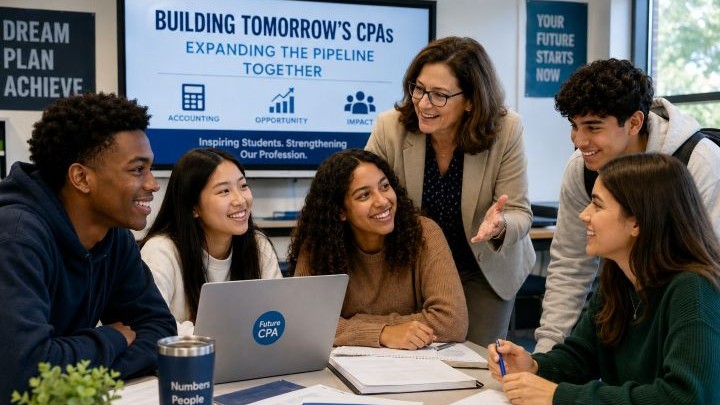
Accounting educators can do more than guide college students - they also have the opportunity to introduce high school students to the profession and potentially spark an early interest in an accounting career. Most high school students know very little about the profession. They often have preconceived notions and imagine the stereotypical “nerd” in suspenders with a pocket protector hovered over a 10-key. By expanding their knowledge of both traditional and non-traditional accounting careers, educators can cultivate an interest in students who otherwise may never have explored the possibility of becoming an accountant.
There are two effective approaches to high school outreach - inviting students to campus and visiting the high school classroom. The first is to host an event on campus in which high school students can learn about the accounting profession. These events, commonly referred to as “Discover Accounting Day” or “Explore Accounting Day,” can help raise awareness about the numerous career options available to someone with an accounting degree. The day typically includes presentations from both faculty and current (or former) students, each sharing about the accounting curriculum, their personal experiences and career possibilities.
While effective and generally successful, the on-campus events can be time consuming and costly. A simpler and less formal approach is to visit the high schools and engage with students in their own classrooms. Most high school business teachers welcome guest speakers, particularly those from local colleges, to engage with their students. I have found bringing along college students, such as Beta Alpha Psi officers, can make the experience more appealing. High schoolers often relate more easily to college students, making them more engaging and convincing.
Most students are stunned to learn an accounting degree can lead to fascinating careers, such as an FBI agent or managing the money of an A-list celebrity.
Key Takeaways
Preparing the next generation of CPAs involves more than teaching GAAP principles, tax codes and audit standards. By approaching it strategically and thoughtfully, students can also discover the many career options accounting education can unlock.
By highlighting alternative career pathways, providing opportunities to interact with professionals in the profession and supporting meaningful internship experiences, educators can help students realize the endless possibilities of the profession they are entering.
However, this cannot be accomplished without the support of practitioners who are willing to partner with educators. Helping current and future students understand that accounting roles extend far beyond the conventional image of the “bean counter” may be one of the most valuable lessons we can offer to students. By expanding students’ knowledge of all the possibilities, accounting education can open doors to unexpected careers.
About the Author: Ashley Bentley, Ed.D., CPA is an assistant professor in the department of accountancy and the Blackburn, Childers, and Steagall Faculty Fellow at East Tennessee State University. She can be reached at bentleyab@etsu.edu.

References
Huels, B. & J. Weber. 2021. Explore Accounting Day: Combatting Higher Education Enrollment Challenges in United States Undergraduate Accounting Programs. The Accounting Educators’ Journal, 31(1), 29-48.