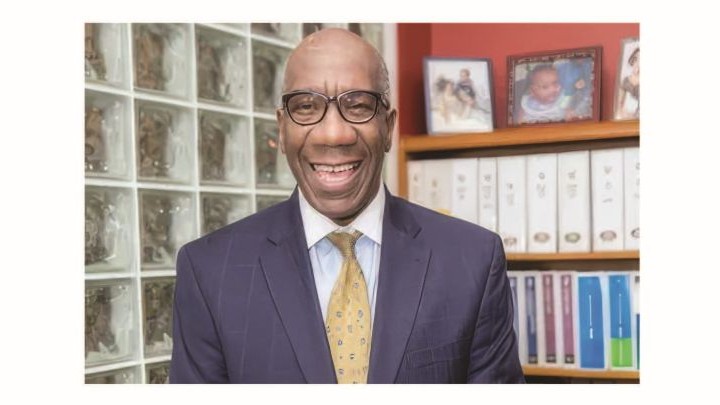
By Josef Rashty
~~ ~~ ~~ ~~ ~~ ~~ ~~ ~~ ~~ ~~ ~~ ~~ ~~ ~~ ~~ ~~ ~~ ~~ ~~ ~~
CPE Self Study Article & Quiz Register to gain access to the self-study quiz and earn one hour of continuing professional education credit by passing the quiz.
REGISTER
DOWNLOAD PDF
~~ ~~ ~~ ~~ ~~ ~~ ~~ ~~ ~~ ~~ ~~ ~~ ~~ ~~ ~~ ~~ ~~ ~~ ~~ ~~
CPE Hours: 1
Curriculum: Accounting and Auditing; Management
Level: Basic
Designed For: CPAs in Business and Industry and Public Practice
Objectives: To provide an overview of both authoritative and nonauthoritative accounting guidance on intangible assets
Key Topics: Internal use software; technology-based, contract-based, marketing-related, and artistic-related intangible assets; Internet domains, trade dress and newspaper mastheads; noncompetition and collective bargaining agreements; goodwill; assembled workforce; crypto assets; and research and development
Prerequisites: None
Advanced Preparation: None
~~ ~~ ~~ ~~ ~~ ~~ ~~ ~~ ~~ ~~ ~~ ~~ ~~ ~~ ~~ ~~ ~~ ~~ ~~ ~~
This article presents a comprehensive overview of both authoritative and nonauthoritative accounting guidance on intangible assets. It focuses on the Financial Accounting Standards Board’s (FASB’s) recent targeted GAAP improvements addressing the accounting and reporting of internally developed software.
Intangible assets may be created internally or obtained through business combinations or asset acquisitions. A summary table at the end of the article outlines the principal sources and acquisition methods for intangible assets.
Internal Use Software, the New Guidance
In September 2025, FASB issued ASU 2025-06, "Intangibles–Goodwill and Other–Internal-Use Software (Subtopic 350-40): Targeted Improvements to the Accounting for Internal-Use Software.” This update amends specific requirements for accounting and disclosure of software development costs under ASC 350-40.
Under the existing guidance in ASC 985-20, "Costs of Software to Be Sold, Leased, or Marketed," companies expense software development costs incurred before technological feasibility is achieved. According to ASC 985-20-25-2, companies establish technological feasibility by reviewing a detailed program design for high-risk development issues – such as novel or unproven functions or technological innovations – and have resolved those uncertainties through coding and testing. Consequently, companies reflect most of the software development costs as expenses before achieving technological feasibility under this standard.
ASU 2025-06 does not change the accounting treatment for costs related to software developed for sale, lease or marketing to external customers. However, it supersedes the guidance on website development costs in ASC 350-50, Website Development Costs, and consolidates that guidance within the recognition requirements for software development costs under ASC 350-40.
ASC 350-40, Intangibles–Goodwill and Other–Internal-Use Software applies to costs incurred to develop or obtain software solely for internal use (including software used to provide software-as-a-service, or SaaS, offerings to customers). The scope also includes the costs a company incurs to implement a cloud computing arrangement as a customer (e.g., purchasing SaaS), which will continue to be evaluated for capitalization under the internal-use software guidance, as amended.
Under the existing guidance, the assessment of whether costs should be expensed or capitalized considers the project stage – preliminary project stage, application development stage or postimplementation-operation stage – during which the costs are incurred. In the current software development environment, however, many companies use an agile or iterative development approach that breaks down larger projects into smaller increments and uses real-time feedback to continuously iterate the development process.
New Guidance. ASU 2025-06 removes all references to development stages throughout ASC 350-40 and requires entities to begin capitalizing software costs when both of the following occur:
- First, management, which has the relevant authority, implicitly or explicitly authorizes and commits to funding a computer software project.
- Second, management considers it probable that it can complete and use the software to perform the intended function (referred to as the probable-to-complete recognition threshold).
However, under the ASU, entities do not need to review a detailed program design for high-risk development issues (i.e., an entity does not need to have a detailed program design to conclude that the probable-to-complete threshold has been met for a software project). To improve consistency in application and provide clarity about the probable-to-complete threshold, the ASU defines probable as “the future event or events are likely to occur.”
The probable-to-complete recognition threshold is not met until significant uncertainty associated with the software's development activities (referred to as significant development uncertainty) has been resolved.
Under the amended recognition threshold, entities developing internal use software must assess whether the software includes technological innovations or novel, unique or unproven features. If so, they must determine whether uncertainty around developing those features needs to be resolved through coding and testing. This evaluation is performed at the project level rather than the product design level.
The new standard applies to all entities and is effective for fiscal years beginning after December 15, 2027, including interim periods within those fiscal years. Entities may adopt the guidance prospectively, retrospectively or using a modified retrospective approach, with early adoption permitted.
Technology-Based Intangible Assets
ASU 2025-06 applies to technology-based software development, other than website development accounting mentioned earlier. Some of these applications are highlighted below.
Generative AI. Generative artificial intelligence (AI) refers to technology that creates various types of content – such as text, images, video, and audio – based on user input. It operates through foundation models; large-scale machine learning systems trained on vast datasets. A user provides prompts – instructions or questions, often expressed in natural, everyday language – and the system generates corresponding outputs. The underlying technology enables intuitive interaction, allowing humans to converse with AI systems rather than issuing complex programming commands.
Mask Works. Mask works are forms of software that are permanently stored on read-only memory (ROM) chips. Mask works, computer software and program formats are often legally protected by patents, copyrights or other forms of intellectual property rights. When such protection exists, these assets meet the contractual-legal criterion for recognition as identifiable intangible assets. However, even if they are not protected by legal or contractual means, these assets may still satisfy the separability criterion if there is evidence of sales or exchanges of the same or similar assets.
Databases, Including Title Plants (Intangible Assets). Databases are collections of information, typically stored electronically. Some databases containing original works of authorship may be protected by copyright and therefore meet the contractual legal criterion. More commonly, databases contain information gathered through routine business activities – such as customer, scientific or credit data – and, like customer lists, are often sold or licensed, meeting the separability criterion.
Internet Domains, Trade Dress and Newspaper Mastheads
ASC 805-10-55-19 defines an Internet domain name as a unique alphanumeric name used to identify a specific numeric Internet address. Registration of a domain name establishes an association between that name and a designated computer on the Internet for a specified registration period. These registrations are renewable. A registered domain name acquired in a business combination meets the contractual-legal criterion.
Trade dress refers to a product’s distinctive color, shape or packaging and is often protected under trademark law. Legal rights also protect newspaper mastheads, much as trademarks do.
Goodwill
ASC 350, "Intangibles–Goodwill and Other," defines goodwill as “an asset representing the future economic benefits arising from other assets acquired in a business combination that are not individually identified and separately recognized.” In other words, goodwill is the excess amount that an acquirer is willing to pay over the fair value of the acquired reporting unit (acquiree) from the perspective of an appropriate market participant.
Companies that do not meet the definition of a Public Business Entity under ASU 2013-12 may amortize goodwill on a straight-line basis over 10 years or less. The guidance also removes the annual impairment test, requiring it only when events or circumstances suggest the entity’s fair value may fall below its carrying amount.
In an asset acquisition, GAAP prohibits the recognition of goodwill (ASC 805-50-30-3). The acquirer does not recognize negative goodwill or bargain purchase price either. The prevailing accounting practice holds that acquirers should reflect the bargain purchase gain as a reduction in the fair value of the non-monetary assets acquired in an asset acquisition transaction.
In the January/February 2025 issue of Today’s CPA, the author published the article "Goodwill and Unit of Accounting,” which discusses the accounting issues related to Goodwill.
Microsoft’s Form 10-Q
The following is an excerpt from Microsoft’s Form 10-Q for the quarterly period ended March 31, 2023:
“Goodwill was assigned to our Intelligent Cloud segment and was primarily attributed to increased synergies expected to be achieved from the integration of Nuance. No goodwill is expected to be deductible for income tax purposes.”
This excerpt refers to “increased synergies” and Microsoft claims that it plans to achieve these synergies through its business combination. However, if Microsoft fails to do so, it may record goodwill impairment. |
Marketing-Related (Trademarks)
Companies primarily use marketing-related intangible assets to promote their products or services. These assets typically have an indefinite useful life and are legally protected; therefore, they meet the contractual-legal criterion for separate recognition as identifiable intangible assets. Common examples include trademarks and trade names.
GAAP does not require companies to amortize trademarks for financial accounting purposes; however, for tax purposes, companies may amortize trademarks acquired in a business acquisition. Companies recognize trademarks on their balance sheets primarily through acquisitions or asset purchases.
Noncompetition (or Noncompete) Agreements
Noncompete agreements are legal agreements that prohibit a person or business from competing with a company in a particular market for a specified period. Employers often include noncompete clauses in the employment contracts of executives, salespeople, scientists, and others who have access to confidential or proprietary information. Click here to read more about noncompete agreements.
Artistic-Related
ASC 805-20-55-30 defines artistic-related intangible assets as follows:
Artistic-related assets acquired in a business combination are identifiable if they arise from contractual or legal rights, such as those provided by copyright. The holder can transfer a copyright, either in whole through an assignment or in part through a licensing agreement. An acquirer can recognize a copyright intangible asset and any related assignments or license agreements as a single asset, provided they have similar useful lives.
Copyrights or other contractual and legal means protect artistic-related intangible assets and are subject to amortization and impairment. Artistic assets include:
- Books, magazines, newspapers, and other similar literary works.
- Musical works such as compositions, song lyrics and advertising jingles.
- Films, motion pictures, photographs, and television programs.
Contract-Based
Contract-based intangible assets represent the value of rights that arise from contractual arrangements. They could be subject to either amortization or impairment. Contract-based intangible assets include:
- Licensing and royalty agreements.
- Employment contracts.
- Lease agreements and use rights.
Use rights are contract based intangible assets subject to amortization and impairment. They can have characteristics of both tangible and intangible assets and should be recognized according to their underlying nature. For example, mineral rights – legal rights to explore, extract and retain mineral deposits – are considered tangible assets under ASC 805-20-55-37.
A lease agreement is an arrangement in which one party obtains the right to use an asset from another party for a period of time, in exchange for consideration. ASC 842, Leases, requires lessees to recognize a right of use asset and lease liability for nearly all leases, except short term leases. Lessees may elect, by asset class, not to record leases of 12 months or less that lack a reasonably certain purchase option. Right of use assets are subject to amortization and potential impairment.
Assembled Workforce
ASC 805-20-55-6 defines an assembled workforce as the existing employees who allow an acquirer to continue operating immediately after the acquisition. Although an acquirer may separately recognize employment agreements, the assembled workforce itself has no contractual legal basis and is not separable, since it cannot be sold or transferred without disrupting the business. Therefore, it is not an identifiable intangible asset and any related value is included in goodwill.
The acquirer includes in goodwill the value of any acquired intangible asset that is not identifiable at the acquisition date. For example, value attributed to an assembled workforce is subsumed into goodwill. An assembled workforce does not represent the skilled intellectual capital of employees and is not an identifiable asset, so any related value is included in goodwill.
In an asset acquisition, the acquirer does not recognize an assembled workforce because it presumes a substantive process or business exists under ASC 805-10-55-3A. As a result, an assembled workforce is not an identifiable intangible asset and cannot be recognized separately. Although some nonauthoritative literature treats it as an intangible asset under Concepts Statement 5, this author maintains it should not be recognized for the reasons noted above.
Collective Bargaining Agreements
- Establish terms of employment, including wage rates, overtime rates and holidays.
- Do not require a duration of employment for either employees or employers.
- Allow employees to leave voluntarily and employers to terminate employment under at-will arrangements.
- Do not qualify as separately recognized intangible assets, similar to an assembled workforce.
|
Crypto Assets
Cryptocurrency is a digital currency that uses cryptography to secure transactions and operates on decentralized networks rather than under a central authority. Bitcoin, created by the pseudonymous Satoshi Nakamoto, is the best-known cryptocurrency, with Ethereum, Tether and Cardano among the leading alternatives. Stablecoins are cryptocurrencies whose values are pegged to the U.S. dollar or other assets, such as gold.
In July 2025, President Donald Trump signed S. 1582 – The Guiding and Establishing National Innovation for U.S. Stablecoins Act (the GENIUS Act) – into law. The Act governs payment stablecoins, a newer form of digital money issued and transferred on chain and pegged to fiat currency. The Act will likely take effect at the earliest in the first quarter of 2027.
In December 2023, FASB issued ASU 2023-08, Intangibles–Goodwill and Other–Crypto Assets (Subtopic 350-60). FASB’s final guidance requires all entities to measure certain crypto assets they hold at fair value and reflect the changes in fair value in net income each reporting period. Entities should present crypto assets at fair value separately from other intangible assets on their balance sheets and present changes in the fair value of crypto assets apart from changes in the carrying amounts of other intangible assets in their income statements.
In Process Research and Development (IPR&D)
Companies separately identify IPR&D assets from goodwill under ASC 805, Business Combinations, and they recognize and measure them at fair value regardless of whether those assets have an alternative future use.
ASC 350-30-35 requires companies to measure IPR&D at fair value and account for it as indefinite-lived intangible assets not subject to amortization. ASC 350, Intangibles–Goodwill and Other, requires companies to perform impairment testing of acquired IPR&D during the post-acquisition period.
ASC 730-10-25, Research and Development, requires that companies expense the incremental IPR&D costs incurred during the post-acquisition period unless there is an alternative future use.
In an asset acquisition, the acquirer expenses the acquired IPR&D if it has no alternative future use. Suppose the acquirer has purchased the IPR&D and determined it has a future alternative use. In that case, it is accounted for as an intangible asset in an asset acquisition transaction [ASC 730-10-25-2(c)].
Table 1 summarizes the sources of intangible assets reflected in a company's books.
| Table 1. Sources of Intangible Assets | | | |
| Intangible Assets | Internally Developed and Capitalized | Acquisitions | Asset Purchases |
| Internally Used Software and Technology-Based Intangible Assets | ✓ | ✓ | ✓ |
| Internet Domains, Trade Dress and Newspaper Mastheads | ✓ | ✓ | ✓ |
| Goodwill | X | ✓ | X |
| Marketing-Related Intangible Assets (Trademarks) | X | ✓ | ✓ |
| Noncompete Agreements | X | ✓ | X |
| Artistic-Related | ✓ | ✓ | ✓ |
| Contract-Based Intangibles | ✓ | ✓ | ✓ |
| Assembled Workforce | X | X | X or ✓ |
| Collective Bargaining Agreements | X | X | X |
| Crypto Assets | ✓ | ✓ | ✓ |
| In Process Research and Development (IPR&D) | X | ✓ | ✓ |
✓ Applicable X Not Applicable | | | |
Accounting for Intangibles: A Judgment Call
Accounting for intangible assets is a complex area within financial reporting. Tax professionals and in house counsel often provide input on their recognition, measurement and disposal.
Most intangible assets require amortization and potential impairment, demanding significant management judgment. Yet authoritative guidance is limited, leaving companies to rely heavily on professional judgment when determining the appropriate accounting treatment for intangible assets.
About the Author: Josef Rashty, CPA, Ph.D. (candidate) provides consulting and academic services in the Bay Area in California. He is a TXCPA member. He can be reached at j_rashty@yahoo.com.

Thanks to the Sponsors of Today's CPA Magazine
This content was made possible by the sponsors of this issue of Today's CPA Magazine:
8amCPACharge
Accounting Biz Brokers
Accounting Practice Sales
Goodman Financial
Rightworks