IRS Revenue Officers Are Not Required to Use the Very Efficient Secure Messaging


IRS Secure Messaging offers a faster, more secure way to exchange tax documents, but many IRS Revenue Officers are not consistently using it. This concern has been raised within the IRS, with the hope that its use may become mandatory.
By Zachary Montgomery, J.D., CPA-Dallas

At a recent stakeholder meeting with the IRS, the TXCPA Relations with IRS Committee and other professional tax organizations received an important update on IRS exam and collections activity for the 2026 season.

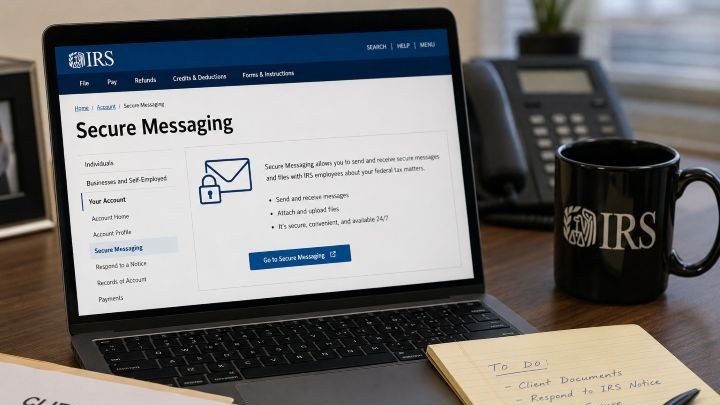
A representative from IRS Field Collections confirmed that a significant percentage of Revenue Officers (ROs) are not consistently using IRS Secure Messaging. Secure Messaging is a web-based, encrypted communication channel that allows taxpayers and authorized representatives to exchange sensitive information and documents directly with assigned IRS personnel handling their cases.

The IRS also indicated that staff working in the Offer in Compromise (OIC) unit and the Automated Collection System (ACS) do not use Secure Messaging at all.

Voluntary Use Creates Inconsistency

The IRS explained that Secure Messaging is currently used on a voluntary basis and is not mandated despite the fact that other systems are, in fact, mandated. While the IRS has emphasized goals of becoming more cost effective and reducing paper, this disconnect raises a practical concern: if the agency is committed to a paperless approach, should use of such tools remain optional?

The lack of a requirement has led to inconsistency in how cases are handled and resolved. Taxpayers and practitioners may experience delays or inefficiencies depending on whether the assigned RO utilizes Secure Messaging.

Benefits of Secure Messaging

Secure Messaging is widely viewed as a more effective and efficient method for sharing tax documents with the IRS. It enables faster communication, reduces reliance on paper submissions and enhances security compared to traditional methods.

However, an additional consideration for practitioners and taxpayers is how the tool is accessed. While IRS letters and notices may include QR codes linking to Secure Messaging, users should exercise caution due to ongoing scams involving QR codes. Accessing Secure Messaging directly through official IRS channels is the preferred approach.

Issue Elevated Within the IRS

This concern has been raised and elevated within the IRS, with the hope that Secure Messaging may eventually become mandatory   particularly given that the IRS already requires the use of other systems and technologies.


Topics:

You May be Interested in

Support the Next Generation

Donate to TXCPA scholarships and help aspiring accountants achieve their goals.