Filling the Accounting Profession Pipeline




Challenges Facing Students and Employers
By Brandon L. Howard, CPA, Bradley Flaum and Anna-Marie Parker
There’s been one word on the minds of students, faculty, recruiters and firm leaders in the last year – pipeline. AICPA’s 2021 Trends Report identifies key trends and provides important information on U.S. accounting enrollments and graduates, hiring in the public accounting sector, and CPA Exam candidates. The report reflects some downward movement in the profession. Enrollments are down. New hires are down. Candidates taking and passing the CPA Exam are down. Despite these trends, we believe not all hope is lost.
Stop me if this sounds like the beginning of a bad joke. A college professor, a recruiter and a graduate student sit down together to discuss their perspectives on the challenges facing students entering the pipeline and the employers trying to hire them. What follows is what we believe are some of those challenges and how we might be able to conquer them.
A disclaimer before we start – our experiences might not be your experiences. Texas is a big state and there are lots of folks in our professional community. While we hope you find some value from this conversation, we also welcome your feedback and unique perspective.
Let’s begin our discussion with what’s happening on college campuses.
Reduced Student Engagement
Student engagement is declining and many factors may be contributing to this decline. Even before COVID-19, new programs for student preparedness were exploding on campus. Students are consistently bombarded with communication and stimulus between email, peer conversations and good old-fashioned flyers posted on the wall. This has led, counter intuitively, to one of our authors seeing a smaller percentage of students participating in the campus student organization focused on their professional development as future CPAs.
When students receive upwards of five to 10 notices of campus programming each week, they quickly begin to ignore all of it. Helping students get streamlined communication on events and programming is going to be key in helping to increase engagement by simplifying the process.
Additionally, most programming tends to happen during the regular workday. Many minority and first-generation students are working part- or full-time jobs while attending school. They simply can’t get away to participate in those programs. By creating
evening
and on-demand programming (for example, a recorded discussion on professional resume writing), we can help reduce barriers for all students and help them stay engaged.
Branding the Internship Experience
Many students need help learning the differences between the various kinds of firms or companies they can choose. Later, we will discuss helping candidates understand the variety of roles offered, but here we want to focus on the different kinds of firms or companies.
For example, an internship experience at a large regional firm is not going to be the same as the internship experience at a small local firm with only two CPAs on staff. The good news is that’s OK! Those experiences need to be different. Too often, students only see the big bright lights of the biggest firms and are drawn in like moths to a flame. Helping students understand the variety of experiences, and how the differences can affect their ultimate career trajectory, will help retain that talent in the profession longer.
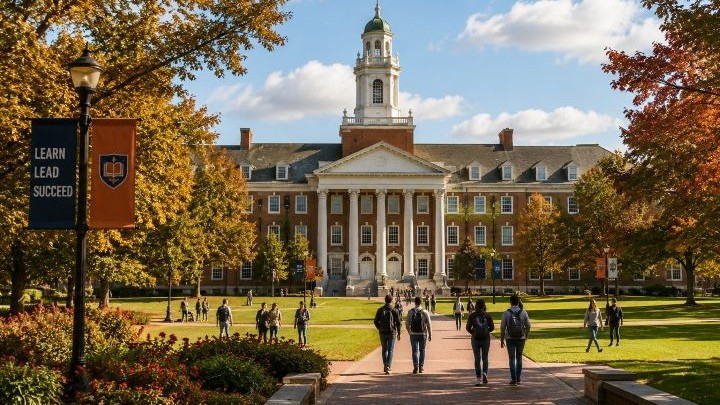
To help us get there, universities can begin to create more focused career preparedness programming. The University of Texas at San Antonio, the institution for two of your authors, has recently implemented a new set of courses to provide students an environment to explore those options. By including these issues in the curriculum, we can ensure all students are given equal opportunity to “see the field” before they have to start playing on it.
Reduce Barriers to Becoming a CPA
Recruiting students to take and pass the CPA Exam is becoming more difficult each day. In conversations with students, more of them are questioning the ultimate value of becoming a CPA and if they are ready to invest the time, effort and funds into taking the Exam.
The costs of purchasing quality study materials and the fees associated with testing are prohibitive to many students. While there are financial assistance programs and scholarships available, not enough students know about them. Helping to get the word out on how students can defer the costs of taking the CPA Exam will help us recruit more of them into the pipeline.
Under current rules in Texas, students must complete their entire 150 credit hours before they can even begin taking the CPA Exam. Except in rare instances, this requires graduation with two college degrees and a large amount of money spent before they can even consider testing. By reducing the hours to begin taking the Exam, students will be able to vet their decision earlier in the process and begin to move into that part of their journey to becoming a professional.
In addition, while accounting students are required to complete 150 hours and pass four sections of a difficult exam to land an entry level role paying on average $60,000-70,000 (don’t forget busy season requirements), their peers complete 120 hours and land entry level roles of upwards of $80,000 - $100,000 in careers like consulting, data science or cyber security. This concept is not lost on these upcoming young professionals. Nearly every other state has reduced this gateway to becoming a CPA. It’s time for Texas to do the same.
From here, we turn to the experience of a current graduate student.
Work Experience Dilemma
The major struggle of not having the work experience requirements for an internship or entry-level job have affected the college student and graduate population at-large. Many students are often having difficulty securing interviews as they do not satisfy the professional work experience requirement of “one year or more” since they have been full-time students for the entirety of college.
Without being able to secure an internship or job under these circumstances, the student is left in a conundrum of not finding a job because they do not match the “required” section of the application. Ultimately, this requirement hinders the applicant from applying to most firms, resulting in a decreased chance of landing their “dream job.”
Educational Requirement Dilemma
Another struggle that many students are experiencing, especially in the accounting field, is the timing of internships and jobs when it comes to educational experience at the university level. When posting their internships, many employers state that the student must be of “junior or senior standing,” which results in fewer opportunities for younger individuals who want to gain the experience and see if they enjoy the subject before pursuing a degree in that field.
Meanwhile, these “juniors” and “seniors” are being forced into the profession as they are nearly finished with their degree and shortly matriculate out of the profession when they find another, different opportunity that they see better growth in. The inability to gain this exposure at a lower educational level has resulted in students struggling to find a job in the short period before and after graduation.
Awareness of Opportunities
Most students are not aware of the opportunities for growth and diversity within many firms and companies. These students go into the accounting profession not even knowing what the different fields within accounting are, and the employers typically do not give a clear-cut explanation of what each service line or sector does for the firm or company. This leads to a career of job hopping for the student as they try to figure out what field fits them best.
Another matter of the opportunity issue is that students have trouble finding which employer provides the career they are interested in while also differentiating themselves from competitors. When a professional is representing a firm or company, an effective strategy to help the student would be to explain what each service line or job entails to garner the interest of the student with the benefits of the true work environment.
Challenges for Recruiters
Finally, we turn our attention to the perspective of the recruiters trying to find and retain this talent.
Today’s campus recruiting market brings a new set of challenges that differ from those of just two years ago in the height of a global pandemic while in peak spring recruiting. Campus recruiters often share many of the same frustrations no matter the size of firm they represent. Some of the most common topics are competition, campus rules, student engagement, intern and new hire compensation, and more recently student integrity.
In a post-pandemic campus recruiting world, the number one challenge for employers of all sizes and industries recruiting accounting talent is the decreased enrollment across universities, specifically accounting. Recruiters tend to think the number one challenges the competition for trying to recruit the “ideal student,” but this competition was in the market for years before 2020 and will remain for the foreseeable future. The truth is the population of “ideal students” and declared accounting majors is severely dwindling while employers are hiring talent across all levels at record high numbers.
Not only is it a challenge to compete for the same students, but the student engagement in recruitment activities in recent years has been lower in a post-pandemic world, whether it is a virtual event, office visit or on campus career fair. Campus recruiters often chalk up the lack of participation to students knowing they will receive multiple offers, most likely from an employer(s) of their choice with minimum effort. As a result, most firms have moved to one interview and offer in hopes to be the first of many offers a student will receive.
In addition to the dwindling accounting enrollment numbers and low student engagement is the lack of student integrity. Firm and company leadership and campus recruiters understand students are receiving many offers to try different firms, business units, locations and industry opportunities; however, student transparency does not appear to be as forthcoming compared to years past.
Students accepting multiple internships without disclosing or accepting an internship with a full- time offer acceptance, reneging on an offer close to their start date or worst of all, not showing up at all without any communication seem to be happening more frequently.
Universities have enacted rules to protect students and employers, but it is difficult to enforce these rules on both parties. One university in Texas has gone as far as making a rule stating a student cannot accept a second internship if they have already accepted elsewhere, unless it is a second internship with the same employer.
This rule seems extreme; campus recruiters are aware of the risk of a student with multiple internships and hope the student is transparent in their discussions to disclose any accepted offers. Ultimately, this should be the student’s choice.
The same university also had employers making exploding offers and then sending communication to students that if they did not accept in the next few days, the offer would be rescinded.
The best campus recruiters accept the challenges of multiple offers, campus rules, compensation fluctuation and even student integrity, but all these challenges are heightened by the biggest challenge of all – lack of new professionals entering the accounting profession.
Communication is Key
We are not holding this out as an all-encompassing list of the challenges facing university faculty, students and recruiters. Rather, we hold these as, from our experience, the top challenges being faced today.
While we discuss several possible ways to address the challenges above, we have so far left out the most important one, communication.
If each sector of the community – universities, students, employers – tries to solve these issues only in their own silos, none of us will ever win the fight. Rather, we need to make sure all parties are represented in discussions on finding possible solutions.
Our world is forever changed after the COVID-19 pandemic. If we don’t put our heads together to think outside of the box, we might fade away. Even when we can clear these obstacles, new ones will emerge. Luckily that’s what we do as CPAs, work together to find creative solutions to novel issues.
About the Authors:
Brandon Howard, CPA, a native San Antonian, has worked with small business on accounting and tax matters for eight years. Currently, Howard is running his own CPA firm and looking to grow his business by
partnering with local San Antonio ventures. He also teaches a full-time course schedule with the UTSA Department of Accounting and is the instructional lead for the MGR Tax Academy. Contact him at brandon@ blhaccounting.com.
Bradley Flaum, a student in the Master of Accountancy program at The University of Texas at San Antonio, has experience in both public accounting and industry accounting. With a plan to start
as an Assurance Staff member in the Summer of 2023 with
EY, he is currently serving as an Internal Audit Intern with Frost Bank.
Anna-Marie Parker is the Texas Campus Recruiting Manager at Crowe, leading the recruiting team responsible for intern and entry level hire goals in Austin, Dallas and Houston. She is a 2010 student athlete graduate of Angelo State University in San Angelo,
Texas, with a B.A. in Communications.