May 08, 2026
Justice for Fraud Victims Project: Bridging the Justice Gap in Financial Fraud



Financial fraud is one of the most pervasive yet under-addressed crimes affecting individuals, small businesses and nonprofit organizations. While the losses can be devastating, many victims face a harsh reality: professional forensic accounting services are often too expensive or simply unavailable. As a result, countless fraud cases go uninvestigated, perpetrators go unchallenged and victims are left without answers – or justice.
The Justice for Fraud Victims Project (JFVP) exists to change that reality.
A Mission Rooted in Access and Accountability
The Justice for Fraud Victims Project, Inc. is a 501(c)(3) nonprofit organization dedicated to combating financial crimes against vulnerable victims through a collaborative, community-engaged model. JFVP partners with higher education institutions, anti-fraud professionals and law enforcement agencies to provide pro bono forensic accounting and fraud investigation services to those who otherwise could not afford them.
At its core, JFVP’s mission is to empower those committed to fighting financial crimes. Through strategic partnerships, professional networking, targeted resources and training, the organization addresses systemic barriers such as limited staffing, lack of funding and restricted access to specialized forensic tools.
Together, JFVP participants strengthen the collective capacity to protect vulnerable communities from fraud and financial exploitation.
From a University Program to a National Model
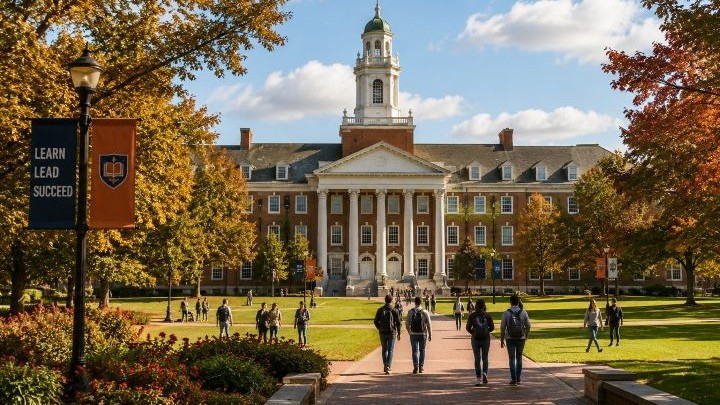
JFVP began in 2010 at Gonzaga University as an innovative collaboration among accounting faculty, college students, law enforcement, and fraud experts. The goal was simple but ambitious: leverage academic expertise to provide real investigative support for fraud victims while giving students meaningful, real-world experience.
That original effort proved highly successful – and scalable.
Today, the JFVP model has been adopted by colleges and organizations across the United States, serving as a national blueprint for how academic institutions can partner with professionals to meet both community and educational needs. While each participating school operates within its own context, all follow the same guiding principles: professionalism, victim-centered service and practical forensic rigor.
What the Project Does and Why It Matters
JFVP provides free forensic accounting services in cases involving alleged financial crimes or occupational fraud. The project focuses on matters where professional forensic work can make a measurable difference, particularly for:
- Vulnerable individuals
- Small businesses
- Nonprofit organizations
Student teams, working under the close supervision of faculty and seasoned anti-fraud professionals, conduct comprehensive investigations designed to answer three critical questions:
- How did the fraud occur?
- What was the financial impact?
- What evidence exists to support legal or corrective action?
The outcome of each case is a professional-quality forensic report that can support civil litigation, criminal prosecution, insurance claims, or internal remediation efforts. If necessary, the supervising anti-fraud professionals use the report as the basis of testifying as an expert witness in a trial.
A Bridge Between Victims, Law Enforcement and Academia
One of JFVP’s defining strengths is its role as a connector. The project operates at the intersection of victims seeking answers, law enforcement constrained by limited resources and academic programs rich in analytical talent.
Benefits for Law Enforcement. Law enforcement agencies often face overwhelming caseloads and limited access to specialized financial expertise. JFVP helps alleviate these pressures by:
- Assisting with case preparation and evidence analysis
- Improving investigative efficiency
- Strengthening cases referred to prosecutors
- Enhancing community trust by ensuring victims are supported
The project’s investigative work has contributed to successful prosecutions, reinforcing law enforcement’s ability to pursue financial crimes effectively.
Benefits for Victims. For victims, JFVP provides more than technical analysis – it provides validation, clarity and hope. By identifying financial discrepancies, tracing transactions and calculating losses, JFVP enables victims to pursue legal remedies and begin the process of recovery. Just as importantly, the project raises awareness about fraud risks, helping prevent future victimization.
Benefits for Students and the Accounting Profession. Students involved in JFVP gain hands-on experience rarely available in traditional classroom settings. They learn to:
- Develop forensic investigations
- Apply accounting theory to complex, ambiguous situations
- Communicate findings clearly and professionally
- Understand the human impact of fraud
Graduates of JFVP-affiliated programs enter the workforce not only with technical competence, but with a deep sense of professional responsibility and ethical purpose – qualities the anti-fraud profession critically needs.
A Model with Real ImpactWhat makes the Justice for Fraud Victims Project truly unique is its dual impact:
Qualification for JFVP involvement is not about rigid criteria, but about fit, feasibility and impact, ensuring that resources are directed to cases where they matter most. |
Supporting and Expanding the JFVP Network
Beyond casework, Justice for Fraud Victims Project, Inc. provides consulting and support services to institutions seeking to launch or sustain JFVP programs. These services include:
- Guidance for starting a JFVP at a college or university
- Assistance in securing forensic tools and resources
- Training for students, faculty and professional mentors
- Networking opportunities among academics, law enforcement and anti-fraud practitioners
Through workshops, events, mentorship programs, and forums, JFVP fosters a collaborative national community focused on prevention, investigation and justice.
Expanding to Texas: Lubbock Christian University’s Story
In 2026, the JFVP model is beginning a milestone with an expansion to Lubbock Christian University (LCU), the first university in Texas that will be implementing the program.
The initiative is led by Laci Richardson, Ph.D., CPA-South Plains, CFE, the Bill and Mildred Crozier Associate Professor of Accounting and Program Coordinator for LCU’s accounting program. A lifelong Lubbock resident, Dr. Richardson brings a blend of academic and professional experience, including nine years at LCU, 12 years in public accounting and seven years as a small business owner.
During the summer of 2024, Dr. Richardson participated in an externship at DFG Forensic Accounting Services (DFG), working as a staff investigator. She investigated an actual fraud case that is now being developed into a case study for her students – an early example of how the JFVP model integrates real-world relevance into accounting education.
LCU’s program is supported by Steve Dawson, CPA-South Plains, CFE, and Jeff Smith, CFE, of DFG Forensic Accounting Services. DFG was founded by Steve Dawson. He is a nationally recognized expert with nearly 40 years of experience in forensic investigations.
Steve Dawson built DFG to meet the growing need for specialized fraud prevention, detection and recovery services across industries ranging from government to nonprofits. Jeff Smith is co-owner of DFG and has over 13 years of experience investigating fraud. Their involvement in the JFVP project ensures that students receive mentorship grounded in professional excellence and practical insight.
The Bottom Line
JFVP demonstrates what’s possible when education, professionalism and service align. By bridging the gap between victims who need help and the expertise required to uncover the truth, JFVP strengthens the fight against financial crime – one case, one student and one community at a time.
Watch your Today’s CPA early next year for a follow-up article on the launch of the JFVP at Lubbock Christian University in Texas. Get an inside look at how this groundbreaking program is beginning to open doors to justice and the impact it will make for those who need it most.
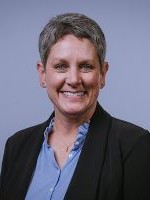

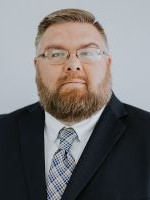
From left to right: Laci Richardson, Ph.D., CPA, CFE; Steve Dawson, CPA, CFE; and Jeff Smith, CFE
Thanks to the Sponsors of Today's CPA Magazine
This content was made possible by the sponsors of this issue of Today's CPA Magazine: